
The role of architect in planning appeal is defined as the expert management of appeal submissions, design arguments, and liaison with the Planning Inspectorate to overturn planning refusals for UK construction and renovation projects. Architects do far more than draw plans. They coordinate specialist reports, frame policy-based arguments, and prepare structured evidence that gives your appeal the best possible chance of success. With new 2026 UK planning rules restricting the introduction of new evidence at appeal stage, the architect's influence on planning outcomes has never been more critical to get right from the outset.
What is the role of architect in planning appeal?
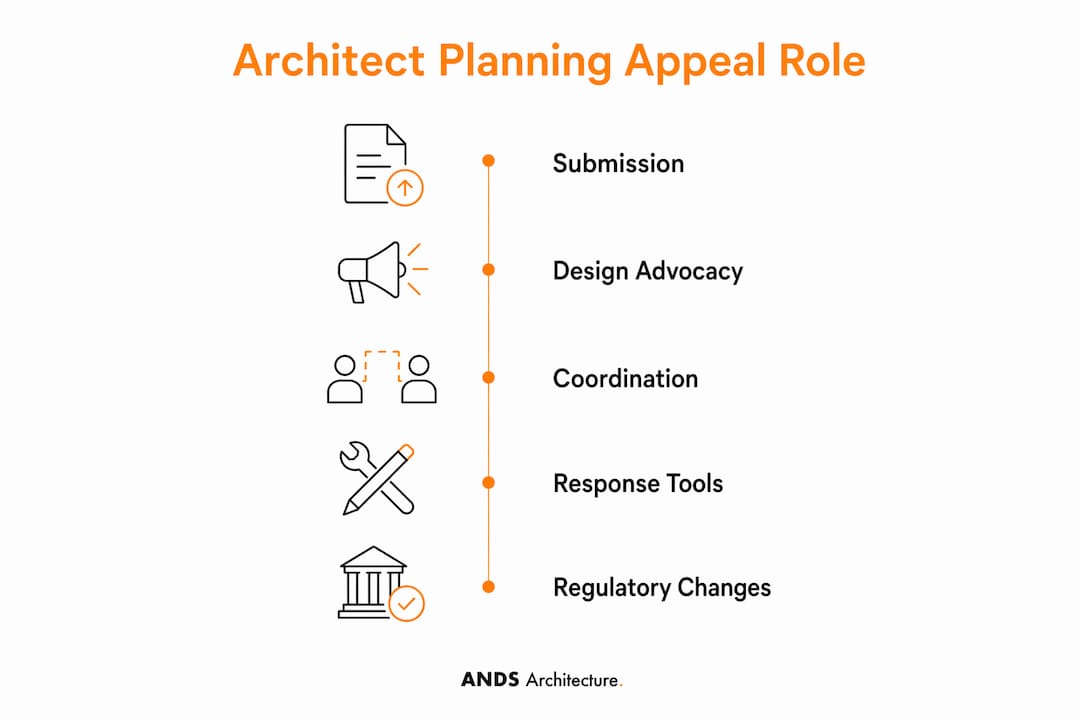
An architect's role in a planning appeal covers three core functions: submission management, design advocacy, and policy compliance. These functions work together to build a coherent, evidence-backed case for the Planning Inspectorate to assess. Without this structure, appeals frequently fail on procedural grounds before the design merits are even considered.
Architects act as strategic partners throughout the application and appeal process, offering credible advice and ensuring consistency with planning law and local policies. This matters because planning officers and inspectors respond to structured, policy-referenced arguments. A well-prepared architect translates your design intentions into the language planning authorities actually use.

The importance of architects in appeals also extends to coordination. They manage ecology reports, heritage assessments, arboriculture surveys, and transport statements, ensuring every specialist document arrives on time and speaks to the same set of refusal reasons. This joined-up approach is what separates a credible appeal from a disorganised one.
How do architects prepare and manage appeal submissions?
Preparing a planning appeal submission is a process-driven task. Miss a deadline or omit a required document, and the Planning Inspectorate can reject the appeal without reviewing its merits. Architects manage this process end to end.
The practical steps an architect takes during appeal preparation include:
- Reviewing the refusal notice to identify every reason for refusal and map each one to a specific policy reference.
- Commissioning specialist reports where gaps exist, including ecology surveys, arboriculture assessments, heritage statements, and transport notes.
- Uploading all documents via the Planning Portal before the strict submission deadline, typically within 28 days of a householder refusal.
- Preparing a planning statement that addresses each refusal reason with direct evidence and policy citations.
- Liaising with the local planning authority to clarify procedural requirements and confirm the scope of the appeal.
- Monitoring appeal progress and responding promptly to any requests from the Planning Inspectorate for additional clarification.
Architects are responsible for discharging planning conditions for successful appeals, enabling legal progression to construction. This means their role does not end at submission. They remain active throughout the process to protect the integrity of the case.
Pro Tip: Request a pre-appeal meeting with your local planning authority before submitting. Architects use these meetings to identify whether a revised design could resolve refusal reasons without a formal appeal, saving you time and cost.
How do architects influence appeal outcomes through design expertise?
Design expertise is where architects genuinely separate themselves from planning consultants working alone. Architects' holistic understanding allows them to push for quality design and align appeals with policy in ways ordinary planning statements miss. This ability to identify and frame unique arguments is often the decisive factor in close appeal decisions.
The specific ways architects shape planning outcomes through design include:
- Aligning proposals with local design codes. Architects cross-reference the proposal against the National Design Guide, local design supplementary planning documents, and any neighbourhood plan policies to demonstrate compliance.
- Using visual evidence. 3D renderings and contextual drawings show inspectors how a scheme sits within its surroundings. This is far more persuasive than written descriptions alone.
- Citing precedent approvals. Architects research comparable schemes that received consent in the same local authority area, presenting these as material considerations that support the appeal.
- Addressing character and context. Connecting a building concept to its historical and landscape context is essential for meeting legal and civic obligations during appeals, especially on complex or sensitive sites.
- Proposing design amendments. Where refusal reasons relate to massing, materials, or fenestration, architects suggest targeted amendments that resolve the objection without compromising the client's brief.
"Architectural connection to site history and landscape is vital not merely for aesthetics but for meeting legal and civic obligations in appeals." — Illya Azaroff, 2026 AIA President
Architects review refusal reasons and suggest design amendments or alternatives offering viable solutions in appeals. This reduces the chance of repeated refusals and supports successful appeal outcomes. For homeowners in areas like Ealing, Chiswick, or Harrow, where local design guidance is particularly detailed, this expertise is especially valuable.
What tools do architects use to respond to planning refusals?
Architects use a set of structured tools to counter refusal reasons systematically. The most effective of these is the response matrix.
A response matrix pairs each reason for planning refusal with a targeted response supported by labelled exhibits. This method is considered best practice in residential appeals involving architectural design. It forces a clear, evidence-backed review by the Planning Inspectorate and removes any ambiguity about which part of the submission addresses which concern.
| Appeal Tool | Purpose | Benefit |
|---|---|---|
| Response matrix | Links each refusal reason to a direct rebuttal and exhibit | Creates a structured, auditable case |
| Architectural drawings | Demonstrates design intent and compliance | Reduces inspector ambiguity |
| 3D renderings | Shows contextual fit within the streetscape | Strengthens visual argument |
| Material samples and swatches | Evidences material quality and appropriateness | Addresses character-based refusals |
| Precedent approval schedule | Lists comparable consented schemes | Supports consistency arguments |
Professional presentation of evidence in appeals includes architectural drawings, colour samples, 3D renderings, and letters from licensed architects to demonstrate compliance with design guidelines. These elements improve clarity and reduce ambiguity in decision-making. For appeal hearings and inquiries, architects also prepare structured presentations and practise responses to likely inspector questions, ensuring the case is delivered with confidence.
Pro Tip: Label every exhibit in your appeal bundle with a clear reference code (e.g., Exhibit A1, A2). Architects use this system to cross-reference the response matrix, making it straightforward for inspectors to locate supporting evidence.
How have 2026 regulatory changes affected the architect's appeal role?
The April 2026 changes to UK planning rules represent the most significant shift in appeal procedure in recent years. UK planning rules from April 2026 require projects to be "appeal ready" at initial submission, limiting opportunities to add evidence at appeal stage. This shift makes the architect's early involvement during design critical to reduce appeal risks.
The practical implications for homeowners and developers are significant:
- New evidence is heavily restricted at appeal. Arguments and supporting documents not submitted with the original application are unlikely to be accepted by the Planning Inspectorate.
- Initial applications must be comprehensive. Every policy justification, specialist report, and design rationale needs to be in place before the application is validated.
- Pre-application advice is now more valuable. Architects use pre-planning consultations with local authorities to identify likely objections before submission, allowing the design to respond to concerns proactively.
- Appeal-ready design thinking starts at concept stage. Architects now structure design decisions with potential appeal arguments in mind from the very beginning of a project.
- The cost of poor preparation has increased. A refusal under the new rules is harder to overturn on appeal because the opportunity to strengthen the case has already passed.
For developers working on sites in West London, Hertfordshire, or other areas with active local design policies, this shift means that early planning strategy is no longer optional. It is the foundation of a viable project.
Key takeaways
An architect's role in a planning appeal is the single most important factor in producing a structured, policy-compliant case that the Planning Inspectorate can assess with confidence.
| Point | Details |
|---|---|
| Submission management | Architects coordinate all documents, reports, and deadlines for the Planning Inspectorate. |
| Design and policy expertise | Architects align proposals with local design codes and national guidelines to counter refusal reasons. |
| Response matrix | This structured tool links each refusal reason to a targeted rebuttal and labelled exhibit. |
| 2026 rule changes | New rules require appeal-ready submissions from the outset, making early architect involvement critical. |
| Visual evidence | 3D renderings, precedent approvals, and material samples strengthen the appeal case significantly. |
Why i think most homeowners underestimate their architect's appeal value
After more than 20 years working on planning applications and appeals across London and the Home Counties, the pattern I see most often is this: homeowners engage an architect to draw the plans, then try to manage the appeal themselves when a refusal arrives. The result is almost always a weaker case than it should be.
The functions of an architect in development go well beyond producing drawings. When I review a refusal notice, I am reading it as a policy document. Each reason for refusal points to a specific part of the local plan or national guidance, and each one requires a targeted, evidence-based response. That is not a skill most homeowners have, and there is no shame in that. It is simply a different discipline.
What I have also found is that architects who were involved from the start of a project are far better placed to manage an appeal. They know the design intent, the site constraints, and the conversations that took place with the planning officer. That context is invaluable when constructing an appeal argument. Bringing in a new architect at appeal stage means starting from scratch, and under the 2026 rules, that is a significant disadvantage.
My advice to any homeowner or developer facing a refusal is straightforward. Treat your architect as your appeal strategist, not just your draughtsperson. The architectural services that matter most in an appeal are the ones that translate your design into a compelling, policy-referenced case. That is where outcomes are won or lost.
— Afraz
How Andsarchitecture supports your planning appeal
Andsarchitecture provides end-to-end support for planning appeals across London, West London, and Hertfordshire, including Ealing, Acton, Chiswick, Harrow, Watford, and Bushey. Our team manages the full appeal process, from reviewing refusal notices and coordinating specialist reports to preparing response matrices and uploading documents via the Planning Portal.

With over 20 years of experience in residential and commercial planning, we understand what the Planning Inspectorate expects and how to present your case with clarity and authority. Whether you are appealing a refused extension, loft conversion, or development project, our planning and architectural services are designed to give your appeal the strongest possible foundation. Contact Andsarchitecture today to discuss your project and find out how we can support your appeal.
FAQ
What does an architect do in a planning appeal?
An architect manages the appeal submission, prepares policy-based design arguments, coordinates specialist reports, and liaises with the Planning Inspectorate to address each reason for refusal with targeted evidence.
Is an architect required for a planning appeal in the UK?
An architect is not legally required, but their expertise in design, policy compliance, and document management significantly improves the quality and success rate of appeal submissions.
What is a response matrix in a planning appeal?
A response matrix is a structured document that pairs each reason for planning refusal with a direct rebuttal and a labelled supporting exhibit, making it straightforward for inspectors to assess the appeal case.
How have the 2026 planning rule changes affected appeals?
Since April 2026, new evidence is heavily restricted at appeal stage, meaning all justification and supporting documents must be submitted with the original planning application. Early architect involvement is now critical to avoid refusals.
Can an architect help after a planning refusal in london?
Yes. An architect can review the refusal notice, identify design amendments or policy arguments that address each reason for refusal, and prepare a structured appeal submission to the Planning Inspectorate.